
Solar Myths vs Facts: What Homeowners Need to Know Before Going Solar
Why Solar Myths Still Exist
It’s time to debunk some solar myths vs facts. Solar energy has become more accessible and affordable than ever, yet many homeowners still hesitate due to outdated or misleading information. These misunderstandings often come from old technology limitations, changing incentive programs, or misinformation passed along online.
Understanding the truth behind common solar myths vs facts helps homeowners make informed decisions based on real performance, real costs, and real benefits—not assumptions.
Below, we break down some of the most common solar myths and explain the facts every homeowner should know.
Myth #1: Solar Panels Don’t Work in Cloudy or Cold Weather
Fact: Solar panels work in cloudy and cold climates.
Solar panels generate electricity using sunlight, not heat. Even on cloudy days, diffused sunlight reaches the panels and produces energy. In fact, solar panels often perform efficiently in cooler temperatures.
According to the U.S. Department of Energy, modern solar systems are designed to operate effectively in a wide range of weather conditions.
Regions with seasonal weather—including New York and New Jersey—continue to see strong solar performance year-round.
Myth #2: Solar Is Too Expensive for Most Homeowners
Fact: Solar is more affordable than ever due to incentives and financing.
Federal tax credits, state incentives, and net metering programs significantly reduce the upfront cost of solar. Many homeowners also choose financing options that allow them to install solar with little or no upfront payment.
When incentives are applied correctly, monthly solar payments can be lower than traditional electric bills—making solar a practical financial choice, not a luxury.
Myth #3: Solar Panels Will Damage My Roof
Fact: Properly installed solar panels protect your roof.
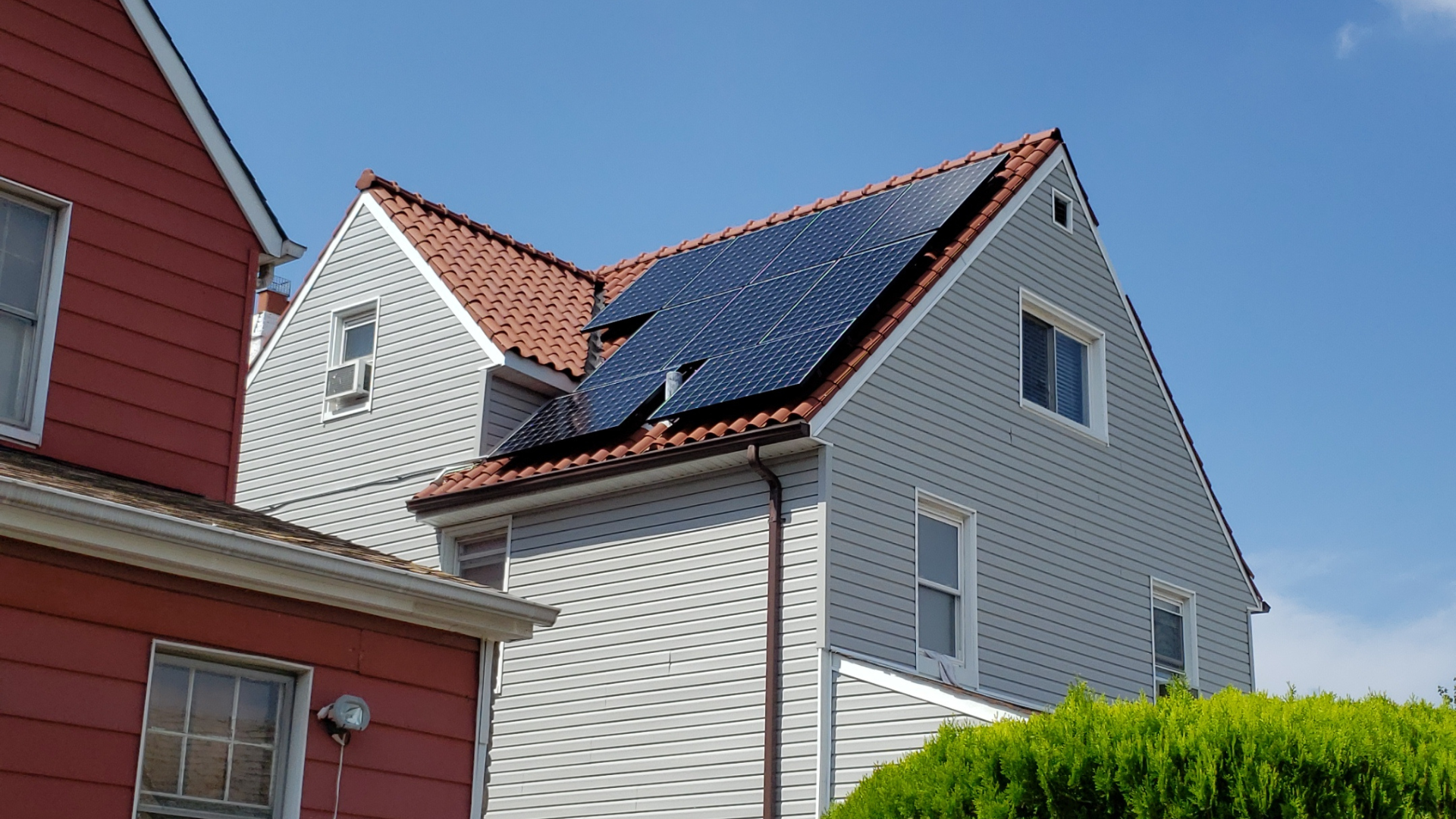
When installed by experienced professionals, solar panels do not damage roofs. In many cases, panels can actually help shield roofing materials from weather exposure.
Installers evaluate roof condition, structure, and lifespan before installation to ensure long-term durability. Mounting systems are designed to prevent leaks and maintain roof integrity.
Myth #4: Solar Requires Constant Maintenance
Fact: Solar systems are low maintenance.
Solar panels have no moving parts, which means very little maintenance is required. Occasional inspections and basic cleaning are usually sufficient to keep systems operating efficiently.
Most panels come with long-term warranties, often 25 years or more, offering peace of mind for homeowners.
Myth #5: Solar Won’t Increase My Home’s Value
Fact: Solar can increase property value.
Multiple studies show that homes with solar systems often sell for more than comparable homes without solar. Buyers value lower energy bills and built-in renewable energy.
Solar is increasingly viewed as a home improvement that adds long-term value rather than a niche upgrade.
Myth #6: Solar Won’t Work During Power Outages
Fact: Solar + battery storage can provide backup power.
Standard grid-tied solar systems shut off during outages for safety reasons. However, when paired with battery storage, solar systems can continue supplying power during outages.
Solar batteries allow homeowners to store excess energy and use it when the grid is down, improving resilience and energy independence.
According to the U.S. Department of Energy, energy storage plays a key role in grid reliability and home backup power.
Myth #7: Solar Incentives Are Too Complicated to Navigate
Fact: Professional installers handle the process.
While incentive programs involve paperwork, experienced solar providers manage submissions, approvals, and coordination with utilities. This ensures homeowners receive all eligible credits without unnecessary delays.
Working with a knowledgeable installer simplifies the process and maximizes savings.
Why Understanding Solar Facts Matters
Believing outdated myths can prevent homeowners from accessing real financial and environmental benefits. Solar technology, incentives, and installation standards have evolved significantly over the past decade.
Understanding solar myths vs facts allows homeowners to evaluate solar based on accurate information—not fear or misinformation.
Solar Is Built for Real Homes and Real Conditions
Modern solar systems are designed for real-world conditions, including changing weather, rising energy costs, and evolving household needs. With proper system design, professional installation, and available incentives, solar is a reliable and future-ready energy solution.
The Bottom Line
Solar myths often reflect outdated information, not today’s reality. The facts show that solar is reliable, affordable, low maintenance, and effective—even in less-than-perfect conditions.
For homeowners looking to reduce energy costs, increase independence, and invest in a cleaner future, understanding the facts makes all the difference. Gain more independence using the sun’s greatest asset alongside our team at Kamtech Solar.